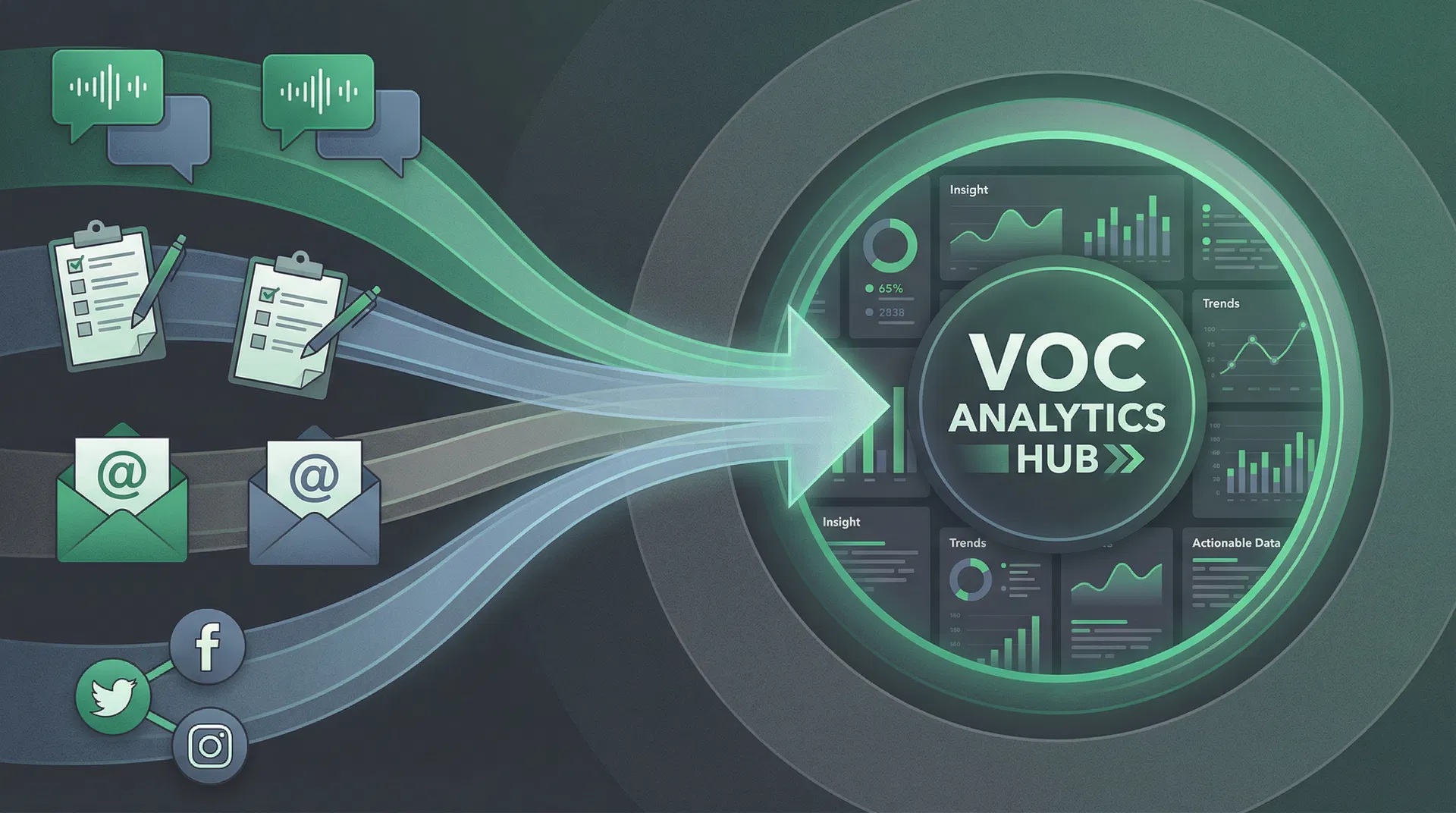
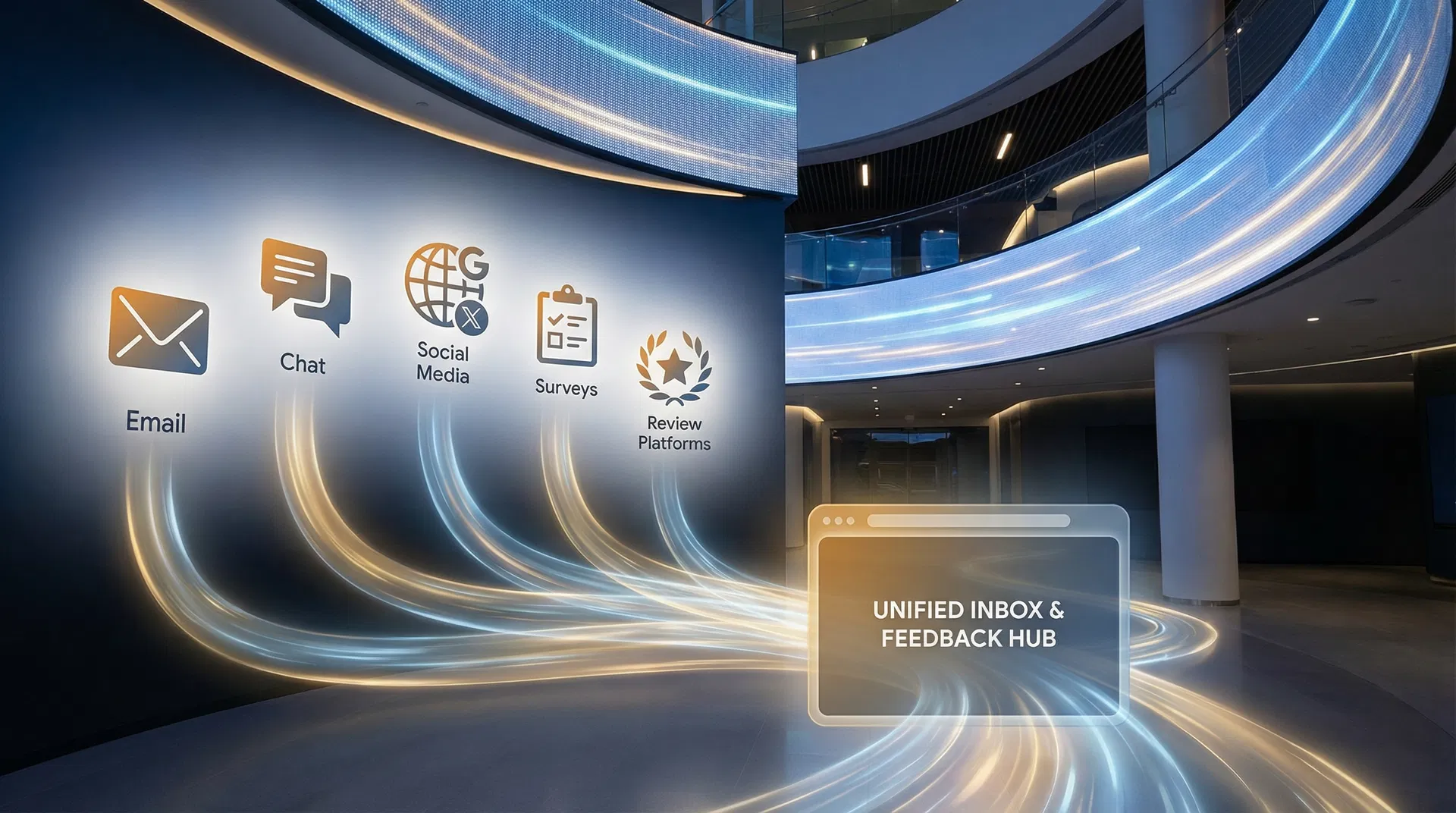
Most organizations collect customer feedback through surveys. While surveys have their place, they capture only a fraction of what customers are actually saying. According to Invesp research, customers interact with brands through an average of 9 different channels. A feedback strategy that relies primarily on surveys misses the vast majority of customer voice.
This article examines how to build a comprehensive multi-channel feedback collection strategy that captures customer insights wherever they are expressed.
The Limitations of Survey-Only Feedback
Surveys suffer from several well-documented limitations. Response rates have been declining for years as survey fatigue increases. The customers who respond to surveys are not representative of your entire customer base — they tend to be either very satisfied or very dissatisfied, missing the critical middle segment. Surveys capture what customers say when asked, not what they say spontaneously. And surveys provide snapshots at fixed intervals rather than continuous insight.
Perhaps most importantly, Pylon's research indicates that 56% of customers will not even complain after a bad experience. These silent churners never appear in survey data — they simply leave. Capturing their voice requires listening across channels where they express themselves naturally.
The Seven Feedback Channels That Matter
1. In-App Feedback
In-app feedback widgets capture customer input at the moment of experience. When a user encounters a confusing workflow, struggles with a feature, or discovers something they love, in-app feedback captures that reaction in context. The key advantage is contextual richness: you know exactly which page, feature, and workflow the customer was using when they submitted feedback.
Best practices include triggering feedback prompts at natural pause points (after completing a task, after using a new feature), keeping the feedback form short (one open text field plus optional category), and capturing metadata automatically (page URL, user segment, account tier).
2. Support Conversations
Every support ticket contains product feedback, whether or not it is labeled as such. A customer asking "How do I export data to CSV?" is implicitly providing feedback that the export feature is not discoverable. A customer reporting a bug is providing feedback about quality.
AI-powered analysis of support conversations can extract product insights automatically, categorizing them alongside explicit feedback submissions. This transforms your support team from a cost center into a feedback collection engine.
3. Online Review Platforms
Google Business Profile, Yelp, G2, Capterra, and industry-specific review sites contain rich, unsolicited customer feedback. Reviews are particularly valuable because they represent what customers choose to say publicly — the issues and praises they feel strongly enough about to share with the world.
According to DemandSage, 93% of customers read online reviews before making a purchase. This means reviews influence not just your existing customers but your prospective ones as well. Monitoring and responding to reviews is both a feedback collection activity and a reputation management activity.
4. Email Conversations
Customer emails to sales, support, and account management teams contain valuable feedback that often goes unanalyzed. A customer mentioning in an email that they "wish the dashboard loaded faster" is providing performance feedback. A prospect asking about a feature that does not exist is providing market intelligence.
Email intelligence tools can scan customer correspondence (with appropriate privacy controls) and extract feedback signals, routing them to the appropriate teams for analysis.
5. Social Media
Customers discuss products on Twitter/X, LinkedIn, Reddit, Facebook, and industry forums. Social listening captures these conversations and identifies feedback themes. Social feedback is particularly useful for understanding brand perception and identifying emerging issues before they appear in support tickets.
6. Sales Call Notes
Sales teams hear feedback every day — objections, feature requests, competitive comparisons, and pricing concerns. This feedback is invaluable for product strategy but often stays locked in CRM notes or individual sales reps' memories.
Structured processes for capturing and categorizing sales feedback ensure that product teams have visibility into what prospects and customers tell the sales team.
7. Community Forums
If your product has a community forum, user group, or Slack community, these channels contain rich feedback from your most engaged users. Community feedback tends to be more detailed and thoughtful than other channels because community members are invested in the product's success.
Building the Unified Feedback View
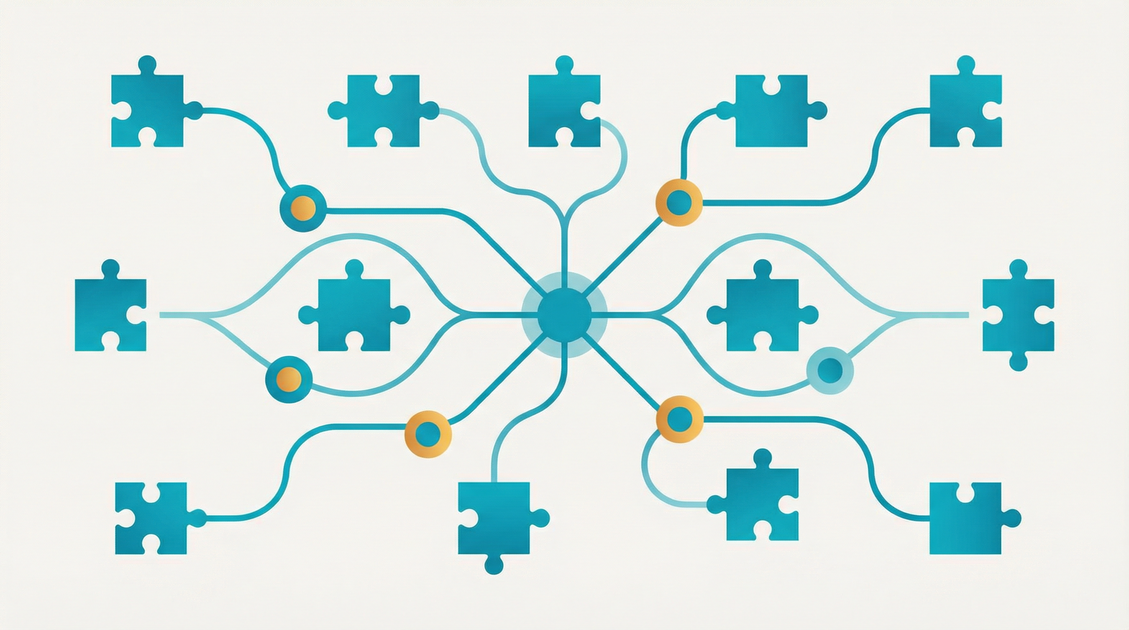
Collecting feedback from multiple channels creates a new challenge: how to make sense of it all. Without a unified system, multi-channel feedback creates more noise, not more insight.
Centralization
All feedback from all channels needs to flow into a single platform where it can be viewed, searched, and analyzed together. This centralization is the foundation of effective multi-channel feedback management.
Normalization
Feedback from different channels comes in different formats. A support ticket looks different from a Google review, which looks different from an in-app feedback submission. Normalization standardizes feedback into a consistent format with common fields: source, category, sentiment, customer identifier, and timestamp.
Deduplication
The same customer might mention the same issue across multiple channels — a support ticket, a review, and an in-app feedback submission. AI-powered deduplication identifies these as related signals and consolidates them, preventing the same issue from being counted multiple times while preserving the multi-channel context.
Cross-Channel Analysis
The most powerful insights come from analyzing patterns across channels. If a theme appears in support tickets, reviews, and in-app feedback simultaneously, it is a higher-priority issue than one appearing in a single channel. Cross-channel analysis reveals these patterns and helps teams prioritize effectively.
Implementation Roadmap
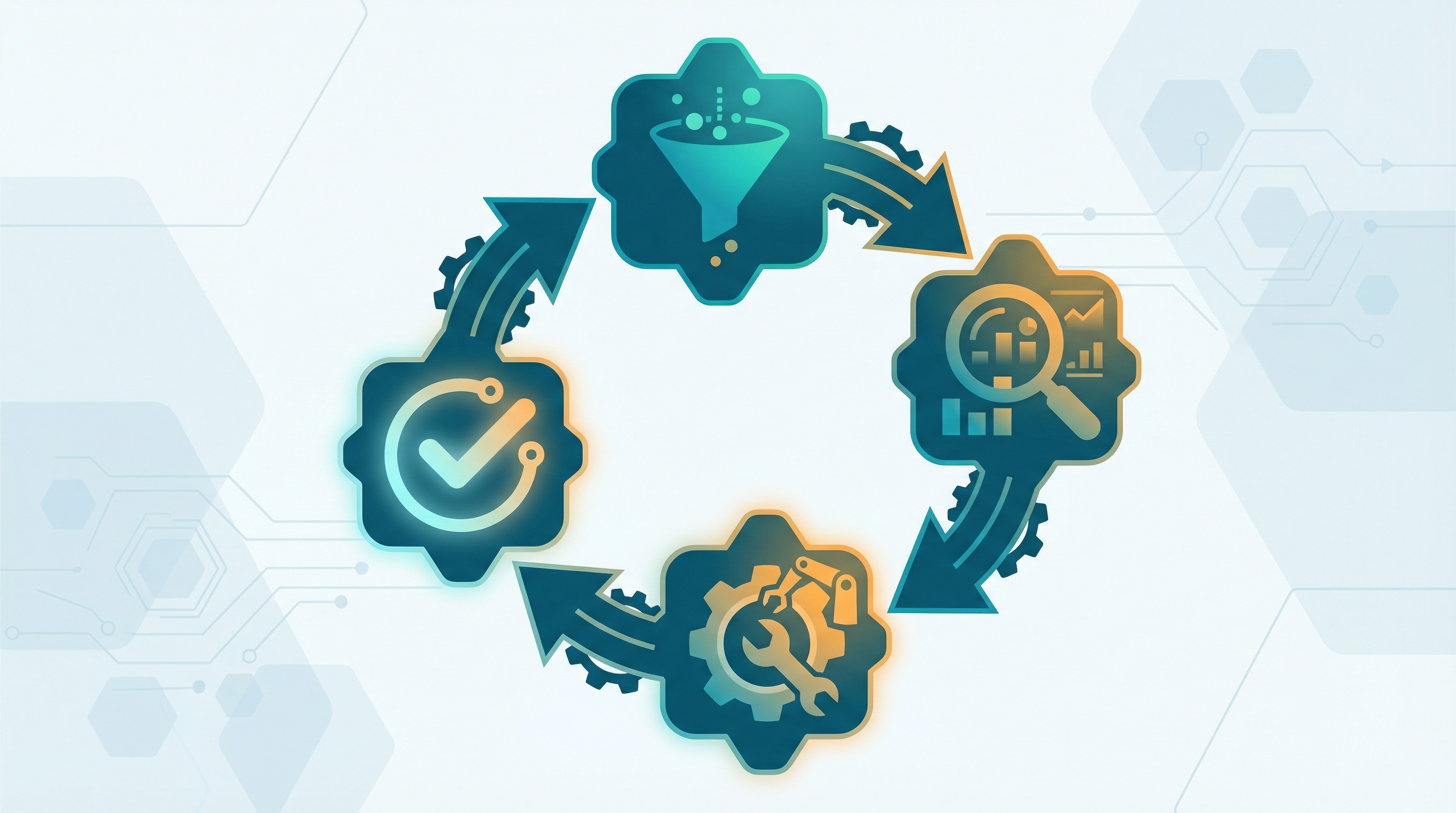
Building a multi-channel feedback strategy does not require implementing all seven channels simultaneously. A practical approach involves starting with your two highest-volume channels (typically in-app feedback and support conversations), adding review monitoring as the second phase, integrating email intelligence and social listening as the third phase, and connecting sales and community feedback as the final phase.
At each phase, ensure that the new channel is properly integrated into your centralized feedback platform with appropriate categorization, sentiment analysis, and routing rules.
The Payoff
Organizations that capture feedback across multiple channels develop a significantly more complete understanding of customer needs and pain points. This comprehensive view enables better product decisions, faster issue resolution, and ultimately stronger customer relationships. The investment in multi-channel feedback infrastructure pays dividends in retention, product-market fit, and competitive advantage.